
Massimo
- Ibiza 2000 vs Ibiza 2024
- Teenager Christopher Slayton built the "entire known universe" in Minecraft. [🎞️ ChrisDaCow] https://t.co/SEjJSVSt8K
- A microscopic tardigrade, also known as a water bear, walking across a glass slide. Extremely resilient, it can survive decades without food or water and are the only known animal that can survive in direct exposure in space. [📹 Tobin Sparling] https://t.co/JwhIPLGyii
- A research into cat behavior shows that domestic cats regard humans as social peers rather than superiors, often perceiving their owners as large, awkward kittens. Far from being aloof or defiant, a cat’s apparent indifference stems from a profound interspecies mismatch in social expectations. As anthrozoologist John Bradshaw explains, cats—unlike dogs—never evolved to recognize humans as dominant leaders or authority figures. Instead, they filter all interactions through an exclusively feline framework. Behaviors like kneading on your lap or licking your hair are not mere displays of affection; they are the same grooming and bonding rituals cats reserve for close kin or pride members. In their eyes, we are simply enormous, somewhat clumsy fellow cats who require inclusion in the group. This absence of hierarchical deference accounts for cats’ frequent disregard of commands or household rules. Treating us as equals, they follow cat-to-cat social protocols in every encounter. The “gifts” of dead prey on the doorstep or constant shadowing around the home are acts of care toward what they see as a big, furless, rather inept companion. Recognizing this mindset transforms the human-cat relationship from one based on authority and obedience to one of mutual companionship. It turns out that while many owners believe they have domesticated their cats, the cats themselves are quietly convinced they are patiently tending to their oversized, adopted family members. [Bradshaw, J. (2013). Cat Sense: How the New Feline Science Can Make You a Better Friend to Your Pet. Basic Books]
- The okapi has the head of a giraffe, the stripes of a zebra, the body of a horse, a blue tongue long enough to clean its eyes and ears and lives in the wild in a single country in the world. Oh, it's not even 150 years we know about it [📹…
- Just 28 days without parabans and phthalates turned off breast cancer genes. Researchers followed a group of healthy women who routinely used common personal-care products containing parabens and phthalates—chemicals found in everything from shampoo and lotion to makeup and fragrance. These compounds can act like estrogen in the body, and excess estrogen-like activity has long been tied to higher breast-cancer risk. For 28 days, 36 women did one simple thing: they switched to paraben- and phthalate-free alternatives. No drugs, no diet changes—just cleaner cosmetics and toiletries. The results were striking: urine tests confirmed that levels of the chemicals’ breakdown products plummeted, proving exposure had been sharply reduced. But the bigger revelation came from breast-tissue biopsies taken before and after the switch. In just four weeks, the women’s breast cells began behaving less like precancerous or cancerous cells. They regained the ability to respond to normal “cell-death” signals (a safeguard tumors often disable). Protective estrogen receptors, which are typically shut down in breast cancer, switched back on. Gene-expression patterns shifted away from high-risk profiles and toward healthier patterns. This is the first human evidence that routine exposure to these everyday chemicals can nudge normal breast cells in a cancer-like direction—and, crucially, that removing the exposure can begin to reverse the process remarkably quickly. It’s not definitive proof that changing your body wash will prevent breast cancer. But it does show that the body notices—and starts to repair itself—almost immediately when you stop putting these substances on your skin. ["Reduction of daily-use parabens and phthalates reverses accumulation of cancer-associated phenotypes within disease-free breast tissue of study subjects." Chemosphere, 2023]

Ibiza 2000 vs Ibiza 2024

Teenager Christopher Slayton built the "entire known universe" in Minecraft. [🎞️ ChrisDaCow] https://t.co/SEjJSVSt8K

A microscopic tardigrade, also known as a water bear, walking across a glass slide. Extremely resilient, it can survive decades without food or water and are the only known animal that can survive in direct exposure in space. [📹 Tobin Sparling] https://t.co/JwhIPLGyii

A research into cat behavior shows that domestic cats regard humans as social peers rather than superiors, often perceiving their owners as large, awkward kittens. Far from being aloof or defiant, a cat’s apparent indifference stems from a profound interspecies mismatch in social expectations. As anthrozoologist John Bradshaw explains, cats—unlike dogs—never evolved to recognize humans as dominant leaders or authority figures. Instead, they filter all interactions through an exclusively feline framework. Behaviors like kneading on your lap or licking your hair are not mere displays of affection; they are the same grooming and bonding rituals cats reserve for close kin or pride members. In their eyes, we are simply enormous, somewhat clumsy fellow cats who require inclusion in the group. This absence of hierarchical deference accounts for cats’ frequent disregard of commands or household rules. Treating us as equals, they follow cat-to-cat social protocols in every encounter. The “gifts” of dead prey on the doorstep or constant shadowing around the home are acts of care toward what they see as a big, furless, rather inept companion. Recognizing this mindset transforms the human-cat relationship from one based on authority and obedience to one of mutual companionship. It turns out that while many owners believe they have domesticated their cats, the cats themselves are quietly convinced they are patiently tending to their oversized, adopted family members. [Bradshaw, J. (2013). Cat Sense: How the New Feline Science Can Make You a Better Friend to Your Pet. Basic Books]
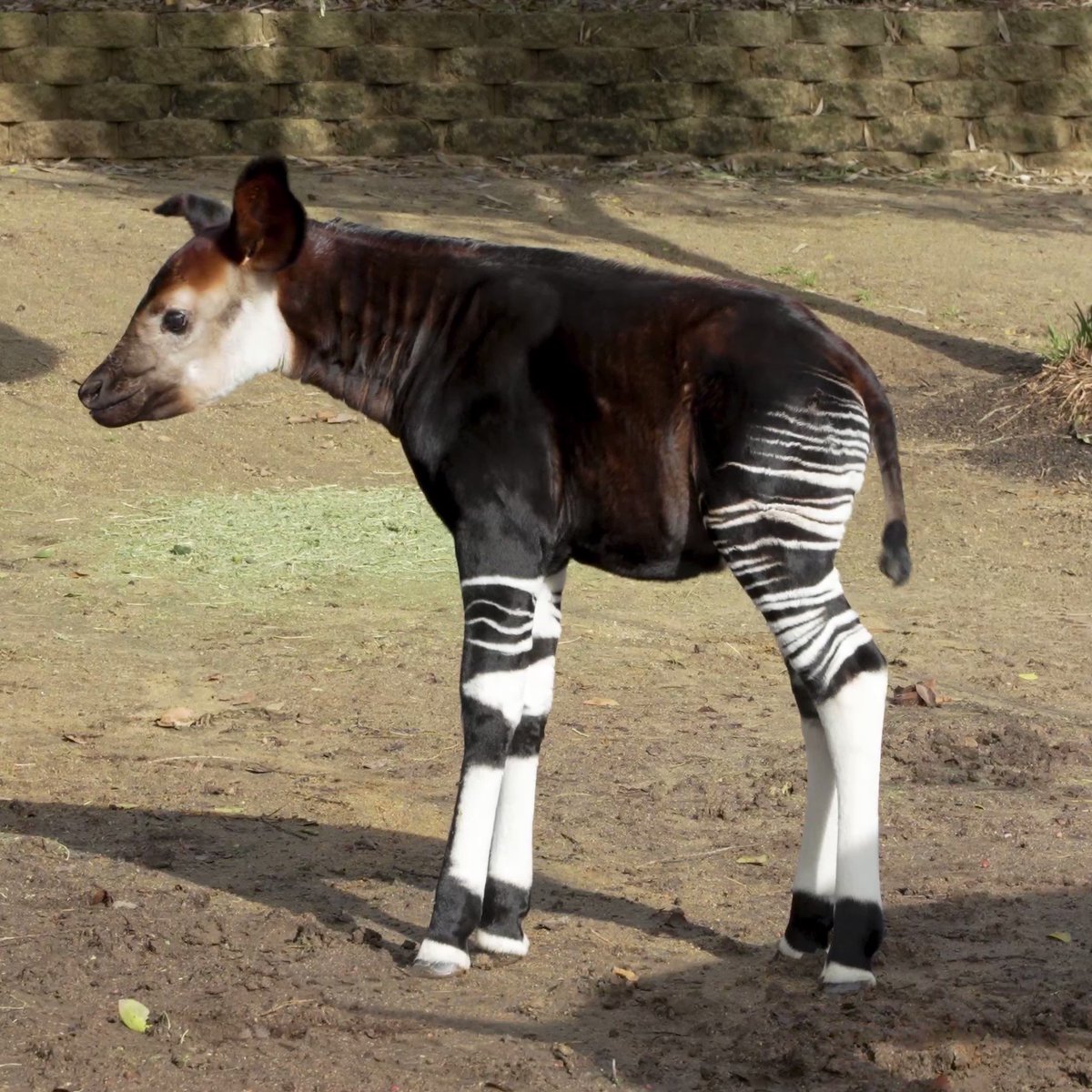
The okapi has the head of a giraffe, the stripes of a zebra, the body of a horse, a blue tongue long enough to clean its eyes and ears and lives in the wild in a single country in the world. Oh, it's not even 150 years we know about it [📹…
Just 28 days without parabans and phthalates turned off breast cancer genes. Researchers followed a group of healthy women who routinely used common personal-care products containing parabens and phthalates—chemicals found in everything from shampoo and lotion to makeup and fragrance. These compounds can act like estrogen in the body, and excess estrogen-like activity has long been tied to higher breast-cancer risk. For 28 days, 36 women did one simple thing: they switched to paraben- and phthalate-free alternatives. No drugs, no diet changes—just cleaner cosmetics and toiletries. The results were striking: urine tests confirmed that levels of the chemicals’ breakdown products plummeted, proving exposure had been sharply reduced. But the bigger revelation came from breast-tissue biopsies taken before and after the switch. In just four weeks, the women’s breast cells began behaving less like precancerous or cancerous cells. They regained the ability to respond to normal “cell-death” signals (a safeguard tumors often disable). Protective estrogen receptors, which are typically shut down in breast cancer, switched back on. Gene-expression patterns shifted away from high-risk profiles and toward healthier patterns. This is the first human evidence that routine exposure to these everyday chemicals can nudge normal breast cells in a cancer-like direction—and, crucially, that removing the exposure can begin to reverse the process remarkably quickly. It’s not definitive proof that changing your body wash will prevent breast cancer. But it does show that the body notices—and starts to repair itself—almost immediately when you stop putting these substances on your skin. ["Reduction of daily-use parabens and phthalates reverses accumulation of cancer-associated phenotypes within disease-free breast tissue of study subjects." Chemosphere, 2023]