@Av1dlive
É muito difícil a vida do hetero
学びたい技術書を読みつつ、わからない部分は ChatGPT に音声チャットで質問しながら読んでいくっていうの、革命的すぎるな。
死ぬほど勉強がはかどってしまい、これ学生の時欲しかったなぁ... ってなってる... 。自分みたいに頭の悪い人は何度も聞きたいし、かみ砕いて教えて貰わないと難しいので、これが欲しかった。
Build a memory system that survives across sessions with Fable 5: write, consolidate, recall, apply
How to Become a Graph Architect With Zero Experience (Full Course)
Anthropic engineer: “99% of people treat Claude Code like a smarter Google search. The other 1% is orchestrating swarms of self-training Claude agents. I’m running 100+ agents on a loop—one Chief agent, a stack of PM agentsand they run the whole crew.” In a 30-minute workshop, an Anthropic engineer broke down how to squeeze maximum output from Claude Code for minimum spend. Honestly, this clears most $500 vibe-coding courses. Watch it today, then dive into the article below on building self-imp…
THE QUEEN OF SCOTTY ROAD HAS ENTERED THE BIG BROTHER HOUSE 😭 #BBUK
open sourced it, go play:
Maestro v2.1 is live! 🎬 This is a big one: • Viggle Animate Support! • Streamlined UI & Menus • Save & share characters w/ RefMod support • H3 Voice Audio: generate long dialogue w/ SFX • H3 Face Refinement • DLSS 5 upscaling Maestro = FREE, OPEN, LOCAL!
The day Grandad farted in a bag. This video had over 24 million views on Facebook, #viral #instagood #fart
Star Wars is 50 years old next year! I’m having some ideas 🤔 👀 #djyoda #starwars #videodj
Can’t make this up…the MacBook is using its webcam to look at its screen in a mirror to improve AMD Radeon chip support in Omarchy.
"Even presidents have private lives" - Bill Clinton If private lives involved Epstein, make them public
Building A Quant Trading Strategy With Claude Code (GARCH Method)
2万人のVTuberを収録した変換辞書『VTuber変換辞書』の収録確認サイトを公開しました! 推しの名前が収録されているか、その場で調べることができます! アクセスはこちらから👉 https://tpmorp.jp/vtdic/
background_terminal_max_timeout = 36_000_000 # 10時間 [features.sleep_tool] enabled = true mode = "always_on" [features.multi_agent_v2] enabled = true min_wait_timeout_ms = 300_000 # 5分 default_wait_timeout_ms = 300_000 max_wait_timeout_ms = 3_600_000 # 1時間
@inkblotistan
ゾロ目やったぜ
イタリアのデジタル団体Autistici/Inventatiが米国の制裁を受け活動停止——ドメイン名剥奪、銀行口座が凍結 https://note.com/akiohoshi/n/n11bbdd7c51c7?app_launch=false 久々に記事を書きました。これは伝えないといけない内容。ぜひ読んで下さい。
これ覚えておくと良いよ。 https://x.com の前に adhをつけるとURLから本文が読めるようになる。 検索などをしたい場合はCodex等で fa0311/twitter_api_safe_relay を用いれば良い。
in my ultramarine era at ArtFight
127 places to get backlinks for startup: 1. Chrome Web Store (DR 99) 2. Forbes (DR 94) 3. TrustMRR (DR 69) 4. GitHub Pages (DR 97) 5. TrustRadius (DR 84) 6. AlternativeTo (DR 79) 7. Product Hunt (DR 91) 8. Substack (DR 94) 9. Uneed (DR 75) 10. Indie Page (DR 66) 11. Privacy Tools (DR 73) 12. SourceForge (DR 92) 13. SEO Wins (DR 32) 14. TinyLaunch (DR 72) 15. OSS Gallery (DR 31) 16. BetaList (DR 76) 17. Alternative Me (DR 75) 18. SaaSHub (DR 79) 19. Medium (DR 94) 20. Indie Hackers (DR 81) 21. H…
seedance 2.5 early 2000s test: ------------------------------------ Generate a fast, energetic montage set at an outdoor pool party in the style of an early 2000s TV show. The footage should feel like it was shot for a teen drama / reality-TV / lifestyle series from the early 2000s — playful, chaotic, youthful, sun-drenched, and slightly messy in a charming way. CAMERA STYLE: true early-2000s handheld DV / broadcast camcorder aesthetic. Use the kind of camera commonly used for behind-the-scenes TV, MTV-style coverage, reality shows, or teen pool-party montage footage from that era. The camera should feel physically operated by a person walking through the party: shaky handheld movement, imperfect framing, quick pans, sudden zoom-ins and zoom-outs, loose reframing, small exposure shifts, slight autofocus hunting, occasional overexposed highlights, rolling movement, and imperfect reactions to the action. No modern cinematic gimbal smoothness. No robotic motion. No polished high-end commercial feel. LOOK: early digital video image quality. Slightly soft detail, baked-in camcorder sharpness, bright blown highlights in the sun, mild video noise, slight interlacing / DV texture feel, saturated summer colors, warm skin tones, punchy pool blues, glossy sunscreen skin, and a nostalgic 2000s television vibe. The footage should feel like archived network TV pool-party coverage from around 2001–2006. SETTING: daytime outdoor pool party at a big suburban or resort-style house. Bright sun, clear sky, palm trees or lush greenery, lounge chairs, towels, coolers, plastic cups, floaties, people sitting on the edge of the pool, groups talking, music playing, people jumping in the water, dancing, laughing, flirting, splashing, and hanging around the patio. MONTAGE CONTENT: capture lots of quick, cuttable handheld shots from different angles and distances. Include: wide shots of the full pool party, medium handheld walk-bys through groups of people, close-ups of drinks clinking, girl…
Anthropic just handed Claude Code users a massive unfair advantage. Almost nobody is talking about it. They released an official prompts library packed with ready-to-use prompts for nearly every development workflow. Thousands of developers are still: • Writing prompts from scratch • Getting inconsistent outputs • Repeating the same tasks manually Meanwhile, the people using this library are shipping faster because they're starting from proven templates. The biggest lesson isn't the prompts. It's seeing how Anthropic structures context, instructions, and reasoning. This might be one of the highest-signal free resources for developers in 2026. Bookmark it now. In a few months, this will probably become the default playbook for Claude Code power users.
Places to get backlinks for startup (v3): 1. Hackernoon (DR 87) 2. DevHunt (DR 63) 3. Tiny Startups (DR 69) 4. Launch Directories (DR 64) 5. TinyLaunch (DR 72) 6. Microlaunch (DR 61) 7. StartupBase (DR 60) 8. ShowMeBestAI (DR 76) 9. Reddit (DR 95) 10. Quora (DR 91) 11. There's an AI for that (DR 77) 12. Hacker News (DR 91)
Places to get backlinks for startup (v4): 1. OpenAlternative (DR 51) 2. StackShare (DR 79) 3. Toolfolio (DR 25) 4. LibHunt (DR 62) 5. SaaS Genius (DR 58) 6. Stacker News (63) 7. FoundrList (DR 72) 8. API List (DR 37) 9. GrowthMentor (DR 72) 10. Scroll Launch (DR 61) 11. PitchWall (DR 69) 12. AlternativeTo (DR 79) 13. Dan Recommends (DR 22) 14. Toolify AI (DR 73)
the concept of having to study (which I hate) to get a job (which I hate) in order to live (which I hate)
We implemented our own custom version of liquid glass
For people who bookmark everything and read nothing
Putting the final touches to our first app. Ever.
Avid
AI Agent Stack everyone must use with GPT 5.6 + Fable 5 (Builder's Guide)
How to Design Using AI in 2026
how to build a one-person company using Kimi K3
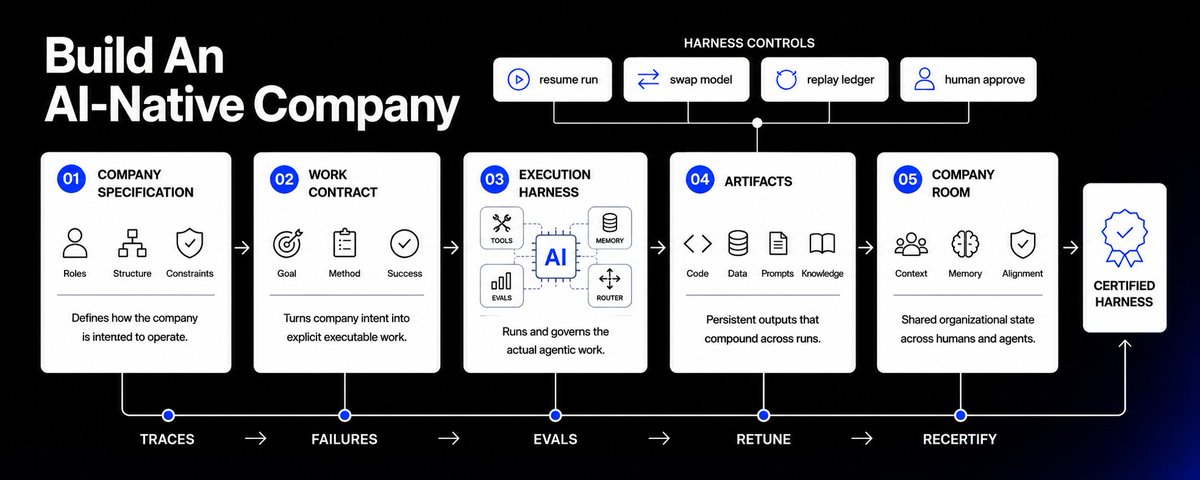
How to Build a Company OS using Kimi K3 (Builder's Guide)
Andrej Karpathy quietly shipped the best second brain idea in years not an app. a pattern. let an llm maintain a wiki of your notes. you dump sources, it reads them, links them, files them. knowledge compounds like interest. someone built it into a free claude code plugin. setup is two commands: claude plugin marketplace add AgriciDaniel/claude-obsidian claude plugin install claude-obsidian@agricidaniel-claude-obsidian then open obsidian, open claude code in the same folder, type /wiki. that's …
this is a f**king goldmine someone just gave out a full course on How to Master “LOOP + GRAPH ENGINEERING” [this one-page course gives you the entire system:] → Opus 5 plans, decomposes, critiques, and evaluates → Kimi K3 executes, explores, codes, and iterates → loops turn one-off tasks into systems that improve every cycle → graphs turn context, memory, tools, and decisions into structure all you need to do is give this screenshot to Claude and tell it to build one of these workflows for your…