@alexgroberman
How Psyops work
💥Holy Crap liberal women are posting just how they feel about killing children. Either by abortion or strangulation liberal women are pure evil. A detriment to society....
これ誰か買って 「くれ」ないかな?
Filesystem-Pilling Your Vertical Agent
【炎上】 おおっと!!!!!wwwwwwwwwww 俺のズボンがアイス食べ放題だー!!!!!!!!!!!!!!!!!!!!!!!!!!!!!!!!!!wwwwwwwww(子どもに次々ぶつかっていく)
OH MY GOD, BRUTAL KO BY LOSENE KEITA AND THEN HE HITS ONE OF THE COLDEST CELEBRATIONS IN UFC HISTORY 😭 #UFCParis
In this clip from the 2015 documentary “The Sunshine Makers,” Nicholas Sand and Tim Scully—two of the most prolific LSD chemists of the 1960s—reflect on their psychedelic exploits behind bars. After being convicted in 1974, the pair found themselves sharing a prison cell. Scully, the meticulous scientist, renounced psychedelics and focused on his legal appeals. Sand, the outlaw alchemist, took a very different path: he smuggled LSD into prison. Inside, Sand turned their cell into a psychedelic sanctuary, becoming the de facto trip guide for fellow inmates. And he didn’t stop there. Through monitoring food deliveries, he managed to dose the entire prison. Sand and Scully weren’t in it for profit. They were spiritual revolutionaries who believed LSD could catalyze a mass awakening. From 1965 to 1969, they produced millions of doses of pure Orange Sunshine, the gold standard of acid, which spread across the country like wildfire. Reflecting on his time in prison, Sand insists that true freedom isn’t the absence of chains—it’s the liberation of the mind. Even behind bars, he remained fiercely devoted to the cause of expanded consciousness. Source: The Sunshine Makers, dir. Cosmo Feilding-Mellen (2015). 🍄 If you want the deeper stories and psychedelic history we can’t always share on social media, comment “Archives” and we’ll send you a link to our unfiltered newsletter.
@Yifeng_LZ
Moo
make money with grok bot in 6 weeks (FULL GUIDE)
its time to improve my skills 👀
This DJ provides visuals for the deaf community so that the hearing impaired can follow along with the beat. Doing the Lord’s work. (Akona)
WELCOME TO TRANSPORT FOR LONDON I’m almost speechless other than to say this is absolutely revolting. This is London in 2026.
New Crop Circle Zürcher Weinland, Switzerland June 23, 2026 Images: Ricardo Perret
This is what a closed Strait of Hormuz does to the world. Think about it.
The Second Brain Is Not a Storage System. It's a Compiler.
as promised, this prompt will change your life... (send it to your hermes agent & thank me later) ---------------------------------------------- create this system - a generic, durable, private, file-based knowledge base and synchronized life tracker that works across sessions without making the user repeat context. build and test the working system. inspect first and extend any existing knowledge base or tracker instead of creating a competing one. ## core outcome create four connected layers:…
The literal meaning of every country's name in Africa. The etymology map of Africa.
Played around a bit with img2threejs and Codex, and I really liked the results. I couldn’t get anything this polished with Blender MCP.
A billionaire trader has spent 40 years trying to delete a one-hour documentary. It shows him making $100 million in a single afternoon. He predicted the crash that made it possible three months in advance. He has never explained why he wants the film gone. His name is Paul Tudor Jones. The film is on YouTube. The documentary is called "Trader." PBS filmed it in 1987, three months before Black Monday. Jones was 32 years old, working from a small New York office, wearing shorts and a t-shirt, yelling at his phones, throwing paper across the room, and sleeping under his desk. The film captures him and his research partner Peter Borish overlaying a chart of the 1929 market on 1987, month by month. The two charts tracked within one percent. Borish said this is exactly what happened in 1929. Jones said if the analog holds, October is when it breaks. On October 19, 1987, the Dow fell 22.6 percent in a single day. It remains the largest one-day percentage loss in stock market history. That afternoon, Tudor Jones covered his shorts and made roughly $100 million. He was 33 years old. He was one of the very few traders on the street who came out ahead. He tried to bury the tape because it made him look reckless in a professional world that punished swagger. Twenty years of legal effort did not delete it. Someone kept a copy. It is on YouTube. It has fewer views than most makeup tutorials. The film is not really about a crash. It is about a specific philosophy of trading. Jones is shown building conviction slowly, sizing carefully, then striking hard when the setup arrives. He is never once shown making a random bet. He is shown doing the same thing five times a day, every day, for three months. His signature line, repeated across a 45-year career: "The most important rule of trading is to play great defense, not great offense." He does not try to be right. He tries not to lose. He sets stops tight, cuts positions fast, and never averages down on a loser. Every trade i…
shipping the prompt here. give this to you codex or claude:
I love the way he says SpongeBob
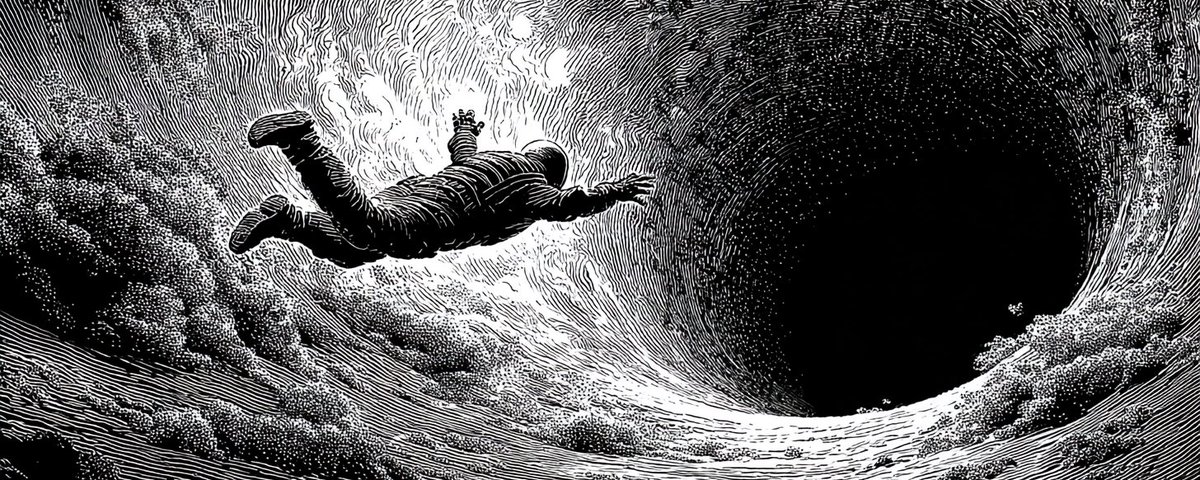
What Happens When Reality Becomes Negotiable?
How I built with Claude 👇 1. Prompt: "Build a storytelling website where each scroll section reveals a new chapter with fluid color transitions" 2. Use Three.js for the painted texture background that reacts to cursor 3. Prompt: "Add GSAP ScrollTrigger so each section animates in as a cinematic scene" 4. Use Lenis.js for that buttery smooth scroll that premium sites have
This incoming Brighton 3-0 Chudsea watch ❤️🩹
How to Design Using AI in 2026
You NEED to develop a “Sense of Urgency”
How to fix your entire life in 1 day
@MrWhaleREAL $MOCK IS LEGENDARY 🚀
@RoundtableSpace $MOCK IS 24H AWAY FROM GOING PARABOLIC 💥
Alex Groberman
If you have multiple interests, do not waste the next 2-3 years