

Elon Musk's Algorithm: the 5-Step process he uses to build everything

There's this story from the Tesla factory that changed how I think about building things.
They had an elaborate system for putting fiberglass mats on battery packs. Complex machinery. Multiple steps. The whole thing had been carefully designed and optimized over time.
Musk walked in and asked a simple question. Why do we need the fiberglass mats?
The answer was fire safety. It was a requirement. Everyone knew you needed the mats.
But when they actually tested it, the mats didn't do much for fire safety. They were a requirement that nobody had questioned. So Musk deleted the entire process.
Saved time, money, complexity. The thing that had been carefully automated shouldn't have existed in the first place.
This wasn't a one-time thing. Musk apparently does this constantly. He has a five-step algorithm that he drills into his teams at SpaceX and Tesla. And the first thing that struck me when I read about it was that most people do it completely backwards.
The algorithm
Walter Isaacson wrote about this in his Musk biography. Musk repeats it so often it's become almost a mantra.
The five steps are:
One. Question every requirement.
Two. Delete any part or process you can.
Three. Simplify and optimize.
Four. Accelerate cycle time.
Five. Automate.
That's it. But the order matters more than the steps themselves.
Most people start at step five. They try to automate first. Or they jump to step four and try to speed things up. Or they go to step three and try to optimize.
But if you haven't done steps one and two first, you're automating and optimizing things that shouldn't exist.
Musk said:
"The most common error of a smart engineer is to optimize a thing that should not exist."
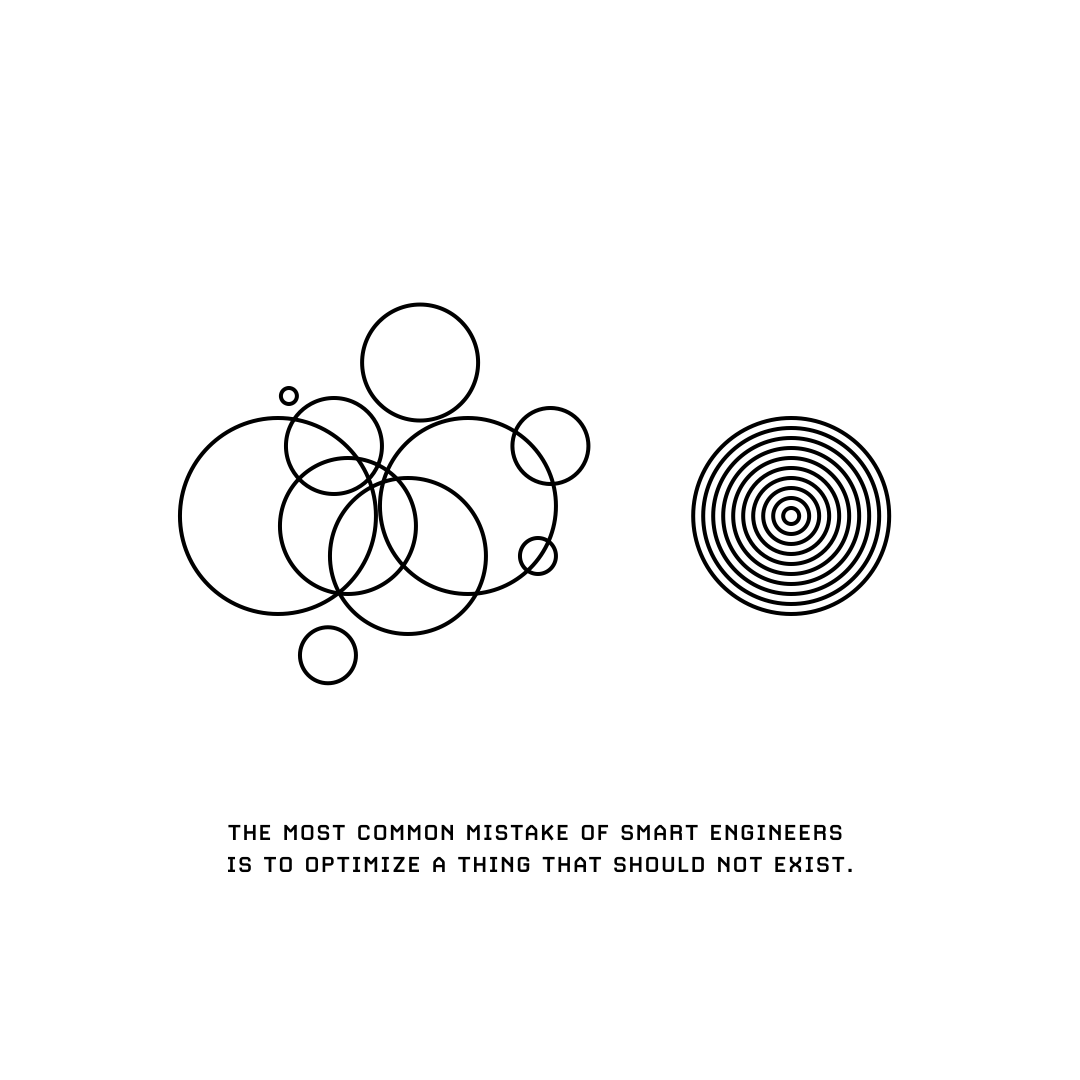
Step one: Question every requirement
This is where Musk gets uncomfortable to listen to.
He says you should question every requirement, especially if it comes from a smart person. Because smart people are less likely to be questioned. We assume they've thought it through.
Musk tells his teams: "Each requirement should come with the name of the person who made it. Never accept that a requirement came from a department."
Departments don't have to defend their requirements. People do.
There's a story about the Model 3 production line. They had a requirement for a certain sensor on the battery pack. It had been there since the beginning. Everyone assumed it was necessary.
Musk asked who required it. Nobody knew. It was just... required. Had always been there.
When they traced it back, they found the original engineer had left years ago. The sensor was solving a problem that no longer existed. They removed it. Nothing broke.
This happened over and over. Requirements that existed because they'd always existed. Nobody questioning them because questioning felt disrespectful or risky.
Step two: Delete
This is Musk's favorite step apparently. He says if you're not occasionally adding things back, you're not deleting enough.
His rule: delete any part or process you can. Not "delete what's obviously unnecessary." Delete everything you can. See what breaks. Add back only what's truly needed.
He said: "If you're not adding back at least 10% of the things you deleted, you haven't deleted enough."
At SpaceX, they applied this to the Raptor engine. Traditional rocket engines have thousands of parts. Each part was there for a reason, supposedly. But Musk kept pushing: why does this part exist? Can we delete it?
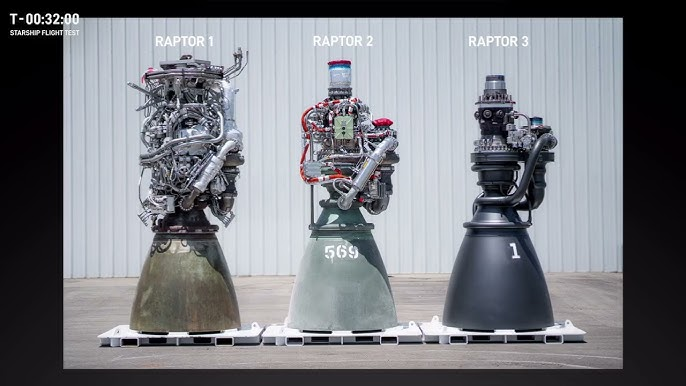
They removed part after part. Combined functions. Eliminated entire systems. The Raptor ended up with dramatically fewer components than comparable engines. Simpler. Cheaper. More reliable.
The same thing happened with Tesla's radar system. For years, Tesla used radar for autopilot. It was a requirement. Everyone in the industry used radar.
Musk questioned it. Do we actually need radar? What if we relied only on cameras, the way humans drive with just eyes?
They deleted radar entirely. Controversial. People said it was dangerous. But Musk's view was that if you don't delete things that seem necessary, you never find out what's actually necessary.
Step three: Simplify and optimize
Here's the crucial part. This step comes third, not first.
Most people start here. They try to make things more efficient. But they're simplifying a process that shouldn't exist in the first place.
Musk says: "It's very common, possibly the most common error, to optimize something that should not exist."
There's a story about the Tesla Model X and its falcon wing doors. The doors were incredibly complex. Tons of sensors, motors, hinges. The engineering team spent months optimizing them, making them work better.

Musk later said the falcon wing doors were a mistake. They shouldn't have existed. All that optimization was wasted effort on a feature that created more problems than it solved.
The optimization felt productive. But it was productive in the wrong direction.
Step four: Accelerate cycle time
Once you've questioned, deleted, and simplified, then you can speed things up.
Musk is obsessed with cycle time. How fast can you go from idea to execution to feedback?
At SpaceX, they build and test rockets faster than anyone thought possible. They blow things up intentionally. Each explosion is data. Each failure teaches something.

When Starship prototypes kept exploding, people outside the company thought it was failure. Musk saw it as rapid learning. The speed of iteration was the competitive advantage.
But notice this comes fourth. You don't speed up a bad process. You question it, delete the unnecessary parts, simplify what's left, and then accelerate.
Speed is a multiplier. If you're doing the wrong thing, speed just gets you to the wrong place faster.
Step five: Automate
Finally, automation. The thing everyone wants to start with.
Musk says this should come last. Because automation locks things in. Once you automate a process, it's harder to change. It becomes invisible.
If you automate before questioning and deleting, you've locked in a bad process. Made it permanent.
Musk learned this the hard way at Tesla. During Model 3 production, they automated everything. The factory was supposed to be this lights-out operation. Robots doing everything.

It was a disaster. The automation was too complex. Things kept breaking. They'd automated processes that shouldn't have existed.
Musk later said: "Excessive automation at Tesla was a mistake. Humans are underrated."
They had to rip out automation and bring back human workers for many tasks. They'd done step five before properly doing steps one through four.
Even Musk makes this mistake. But at least he recognizes the sequence.
Why smart people get this backwards
Musk specifically warns about smart people. He says smart people are more likely to optimize things that shouldn't exist because they're good at optimization.
If you're smart, you can make almost anything work better. You can find efficiencies in bad processes. You can polish bad ideas. You can make wrong directions feel productive.
This is a trap.
The less smart approach might actually be better sometimes. Someone who can't optimize is forced to question whether the thing should exist at all. They can't make a bad process work, so they have to find a better process.
Intelligence becomes a liability when it lets you avoid the hard question of whether you're working on the right thing.
What this looked like for me
I didn't understand any of this when I dropped out of college in 2023.
I tried everything. SEO, SEM, email marketing, copywriting. Then businesses. Dropshipping. Amazon FBA. Lost money on that one. A clothing brand. Affiliate marketing.
Each time, I'd immediately start building systems. Optimizing processes. Making things efficient. That felt like what serious entrepreneurs did.
I had supplier databases before I had sales. Tracking spreadsheets before I had customers. Beautiful systems for businesses that were fundamentally broken.
I was skipping straight to steps three, four, and five. Optimize. Accelerate. Automate.
Never did steps one and two. Never questioned whether the requirements I was following made sense for me. Never deleted the parts that weren't essential.
The shift happened when I found content. The eye for virality that eventually became my actual thing.
This time I didn't start with systems. I started with questions. Why does this post work? Why did that one fail? What's actually driving results versus what's noise?
I deleted ruthlessly. All the "best practices" that didn't seem to matter. The posting schedules that didn't move the needle. The engagement tactics that felt forced.
I simplified to the core. What's the minimum needed for content to perform? Not the maximum. The minimum.
Only then did I build systems. And by that point, I was systematizing something that actually worked. Something I understood. Something stripped down to essentials.
The question that matters
The question I ask myself now before optimizing anything: should this even exist?
Have I questioned the requirements? Have I deleted everything I can?
Most advice tells you to build systems. Automate. Scale.
Musk's algorithm says that's the last step, not the first.
Most advice tells you to follow best practices. Learn from what works.
Musk's algorithm says question every requirement, especially from smart people.
It's backwards from how we usually think. And that's probably why it works.
If everyone's optimizing and automating, the advantage is in questioning and deleting. The stuff nobody wants to do. The stuff that feels like going backwards.
I think about all those months I spent optimizing businesses that shouldn't have existed.
If I had questioned first. If I had deleted before building. If I had followed the steps in order.
I probably would have failed faster at the wrong things and found the right things sooner.
That's the value of the algorithm. Not that it makes you successful. It makes you fail at the wrong things faster so you can find the right things.
Question. Delete. Simplify. Accelerate. Automate.
In that order.
Most people never get past step one. They never question the requirements they inherited.
I'm still not great at it. But at least I know the sequence now.